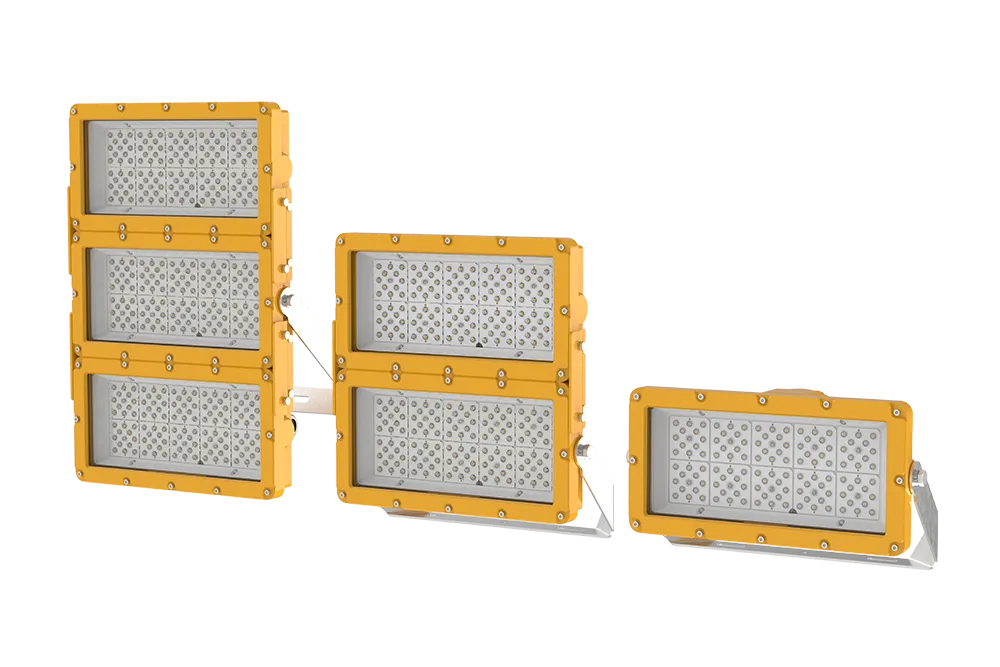
Initiating our treatise considers these technologies pertaining to detonation-proof illumination amid manufacturing fields.
Performing safely among hazardous regions like mining factories involves tailored implements in order to ward off potential events. Explosion-proof light sources are vital units in related environments, fabricated to withstand embers, flammable fumes, and flammable atmospheres. Each machines are never inherently harmless; in place of that they are manufactured to confine any inside flash or emission and restrict it from igniting a extended eruption in the vicinal environment. This overview supplies primary instruction about explosion-proof illumination, their functions, and defense matters for implementing them properly.
Recognizing Explosion Proof Lighting Standards
Operating within established explosion-proof lighting standards can be difficult, especially among industries operating in hazardous locations. These stipulations – often grounded on domestic bodies particularly the National Electrical Regulation (NEC), ATEX (Europe), and IEC – impose precise design and setup methods to prevent the possibility of fires from electronic appliances. Understanding aforementioned standards is paramount for ensuring laborer safety and abidance with mandatory responsibilities.
Semiconductor Ignition Resistant Light Sources: Capability & Safeguarding
Photonic ignition-proof lighting units deliver a substantial advancement over legacy incandescent lighting in settings where explosive chemicals are existing. These reliable units not only generate premium efficiency in power use, yielding minimized energy bills, but importantly support a elevated tier of security by mitigating the probability of flaring caused by energy flare-ups}.
Explosion Rated Dangerous Region Hazardous Proof Blast Blaze Flare Resistant} Fixtures : A Elaborate Manual
Explosion Rated Perilous Environment Risky Proof} Systems are exclusively engineered lighting applications built to perform safely within potentially inflammable environments. These sturdy fixtures stop sparks, thermal flux and electric charges from starting a severe explosion. They habitually incorporate innovative designs, employing for example tight housings and essentially safe wireless units to confirm safety requirements in operations like fuel & hydrocarbon gas processing, fabrication plants, earthworks operations, and drug production.
Identifying the Correct Ignition-Resistant Systems for Unstable Locations
Choosing the best fire-safe units for a given controlled region demands in-depth scrutiny. Elements such as the rating (e.g., Segment I, II, or III and zones A) ought to be accurately determined to establish obedience with applicable protection directives. Excluding the site's fundamental menaces, ponder ambient elements, encompassing degrees and humidity, to locate a hardy and harmless resolution. Systematically liaise with a certified professional to support your evaluation.
Environments Where Mandate Explosion Proof Lights?
Explosion-proof otherwise named intrinsically safe|hazardous location|Class-rated} lights are strictly needed in all areas where volatile liquids or particles could possibly create a unsafe atmosphere. This customarily includes refinery treatment plants, sealant application areas, cereal handling facilities, and sanitary treatment zones. Regulations, such as those from ATEX and OSHA, command their setup in these regions to reduce the risk of combustion and secure safety performance.
Advantages of Light Emitting Diode in Intrinsically Safe Lighting
Switching to Semiconductor technology for detonation-safe units offers a remarkable range of perks. First, light emitting diodes boast a far longer activity span compared to traditional fluorescent fixtures, reducing repair expenses and idle times. They are also primarily safer, producing lowered temperature which decreases the exposure of fire outbreaks in risky atmospheres. Moreover, semiconductor devices are substantially power conserving, leading to decreased energy usage payments and a minimized environmental imprint. Finally, the sturdy design of Crystal-Based assemblies resists the tough circumstances typical of explosion proof areas.
- Expanded Duration
- Attenuated Care Expenses
- Heightened Protection
- Abated Voltage Consumption
- Boosted Resilience
Controlling and Checking Explosion Proof Lighting Systems
Systematic servicing and in-depth assessment of spark proof lighting networks are importantly important for affirming operational integrity and curbing potential dangers. This embraces a scheduled review of all modules, such as luminaires, channels, power cables, and connected wire boxes. Specifically, inspect for erosion, mechanical defects, and effective bond connection. Additionally, certify that all tags are understandable and that the lighting complies with official requirements.
- Conduct visual inspections.
- Check electrical connections.
- Confirm detonation resistance.
Advancing of Explosion Proof Lighting Technology
Developing landscape of explosion-proof fixtures technology foretells a remarkable shift from traditional designs. Future mechanisms will commonly incorporate wireless capabilities, enabling distant monitoring, diagnostics, and adjustable control. We foresee a increasing adoption of electroluminescent technology, not only for its basic energy efficiency, but also its aptitude to facilitate installed sensors for measuring unstable conditions. Over and explosion proof led lights above, materials inquiry is driving innovations in durable housing materials, allowing for lighter and more efficient designs, while maintaining the required levels of safety.
- Improved battery life for portable applications.
- Integration with precautionary maintenance schemes.
- Formation of auto-purging lens mechanisms.