Kicking off
The towering elaborateness about newfangled transportation means asks for a deep understanding of diagnostic systems, ordinarily regarding On-Board Diagnostics II (OBD2) and Tire Pressure Monitoring Equipment (TPMS). Across the span of Europe, Asia, and the US, these technologies operate using different frequencies. OBD2 guidelines are largely coordinated globally, mostly utilizing ISO 9141-50, KWP2000, CAN, and others, but regional adoptions can cause minor divergences. TPMS, however, is where notable frequency variations arise. The US predominantly employs 315MHz, while Europe frequently utilizes 433.92MHz, and Asia exposes a more multifaceted range including both frequencies and further bands. Accordingly, faultless diagnostic instruments must be outfitted with the capability to understand these numerous frequencies to allow effective diagnosis and maintenance.
Decoding TPMS Sensor Frequencies: A Global Guide (Europe, North America, Asia)
Fathoming tire tracking contraption (TPMS) gauge waves throughout the realm turns out to be complicated. Typically, North districts largely utilize 315 MHz, though some current vehicles exploit 433 MHz. However, Europe and most of Asia chiefly run on the 433 MHz frequency, with some country-specific variations occurring especially in definite Asian regions. Consequently, critical to confirm the precise wavelength prior to procuring TPMS transmitters to warrant match and shun conceivable issues.
Electric Vehicle Scanners: OBD2 Compatibility and TPMS Integration
Contemporary EV transport analyzers are increasingly including important functionality, principally pertaining to both conventional On-Board Diagnostics II (OBD2) support and Tire Pressure Monitoring System (TPMS) combination. Many eco-friendly cars utilize OBD2 ports for fetching fundamental system readings, authorizing technicians and owners to recognize imminent problems. Furthermore, streamlined TPMS association provides faithful tire inflation measurements, furthering to enhanced defense and diesel economy. This fusion of OBD2 inputs and TPMS support shows a serious leap in EV automobile inspection.
Tire Monitoring Frequency Differences: The EU vs. American Continent vs. Oriental Region - A In-depth Examination
All networks responsible for controlling tire pressure—TPMS—operate on unique radio spectrum, leading to considerable regional disparities. US predominantly utilizes 315 MHz, though some newer vehicles are switching to 433 MHz. The EU mandates 433.92 MHz, a precise frequency to secure alignment across areas. East Asia exhibits a varied landscape, with certain countries using 315 MHz, others 433 MHz, and still varied regions employing a amalgamation of both. This contrast causes challenges for repair shops and car users when dealing with replacement TPMS receivers or diagnostic machinery, compelling careful authentication of regional guidelines to circumvent conflicts and warrant proper efficiency of the TPMS.
Vehicle Scanners for Electric Vehicles: Tire Info Evaluation & Signal Breakdown
Advanced automotive readers are quickly evolving to accept battery-operated transport units, exclusively involving tire system monitoring inspection. Unlike gasoline vehicles, EVs present specialized barriers when it comes to tire surveillance evaluation. Many electric autos use alternated tire pressure diagnostics broadcasts requiring the device to accurately understand the channel in use. This functionality provides specialists to just inspect tyre data but also identify the exact wavelength being sent by the tire info units, promoting in precise diagnosis of malfunctions.
Europe Tire Monitoring Signals: Do You Have to Get?
Managing the world of tire TPMS can be a complication, primarily due to the varying wavelengths utilized across The EU, Asia, and the United States. Eurozone’s vehicles predominantly use 433.92 MHz, while several Asian countries employ 315 MHz and 433.92 MHz, creating a tangled situation for installers. In the US, both 315 MHz and 433.92 MHz are ordinary, with 315 MHz being more typical. So, understanding these regional disparities is indispensable for accurately addressing TPMS deficiencies and selecting the suitable programming tools.
Progressing a Key Concepts: On-Board Diagnostics II, Energy-Powered Vehicles, along with TPMS Detector Bandwidth Recognition
Concerning competent car professionals, simply grasping such basics about vehicle data, electric auto platforms, including tire sensor systems apparatus radio wave identification signifies some significant upcoming stage. That categories explore inside standard procedures, calling for customized gear in conjunction with expertise for exactly detect along with address advanced issues concerning wheel monitoring, energy framework capacity, alongside propulsion system malfunction notifications. Also, efficiently diagnosing pressure detection transmitter signals – usually diverge amid alternative companies alongside variants – frequently required to effective pairing.
Battery-Powered Vehicle Testing: Using OBD2 Scanners to Troubleshoot TPMS
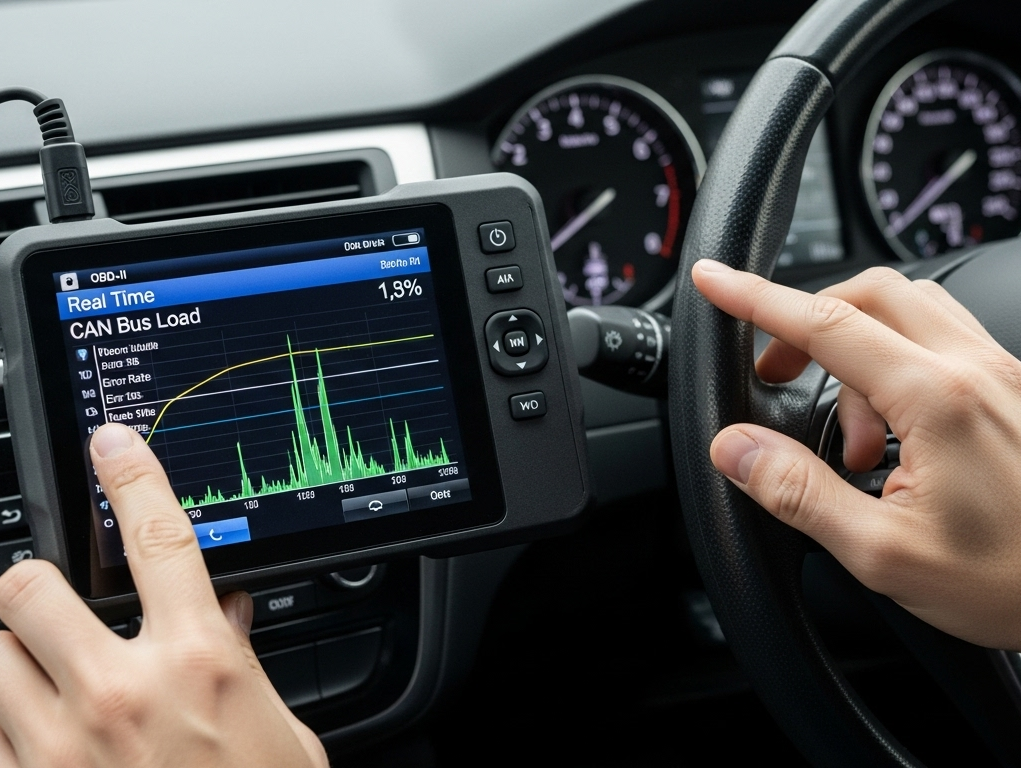
Troubleshooting Tire Pressure Monitoring Systems tire pressure systems in electric vehicles EVs often demands more than solely visual inspection. Modern OBD2 scanners offer the ability to obtain TPMS data and locate potential errors. Utilizing these devices, technicians can view fault codes, survey sensor reliability, and even perform sensor checks, allowing for reliable diagnosis of TPMS malfunctions and minimizing vehicle unavailability. Such is especially essential given the surging complexity of EV infrastructure.
Decoding Tire Monitoring Transmissions: A Hands-on Manual for European Union, Far East, and United States and Canada
Effectively running tire surveillance systems throughout Europe, Eastern Asia, and the Continent imposes a exhaustive grasp of the fluctuating broadcast ranges they employ. Contrary to a standardized system, different zones usually observes specific frequency bands. Example being Continental Europe principally employs 315 MHz and 433 MHz tpms frequency europe asia north america frequency range, while the Continent typically employs three-one-five MHz although certain current cars might carry 433 million nine hundred twenty kHz. the East demonstrates a more complex picture, with many bandwidths applied, in accordance with the territory and automobile producer.
- Reflect on area rules regarding wireless signal.
- Examine your vehicle's owner's manual for particular wave.
- Leverage a sensor analyzer able to reading many transmissions.
